
Tile and Grout
How to Clean Soap Scum Off Shower Tile Walls
Spray a tile-safe soap scum remover, wipe with a non-scratch sponge, rinse and squeegee dry. Vinegar-free tips for stone, and how to prevent soap scum buildup.
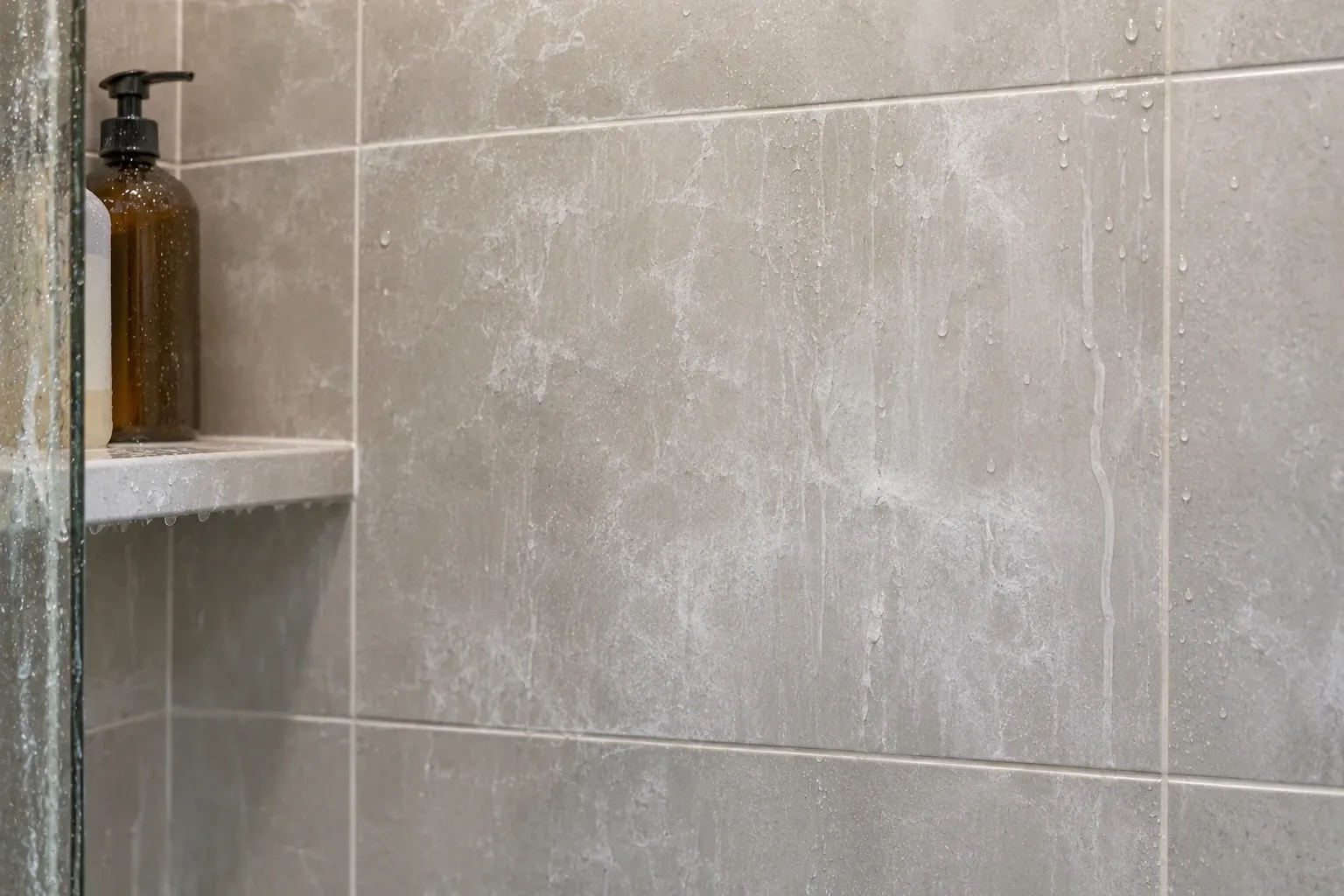
Quick answer: Check whether the walls are ceramic or porcelain tile, or natural stone, and pretest your cleaner. Spray a soap scum remover labeled for tile, wipe with a non-scratch sponge, rinse with clean water and dry with a shower squeegee. Skip vinegar and other acids on grout and on marble, travertine or limestone. After each shower, squeegee the walls and run the fan to prevent soap scum buildup.
Soap film on shower walls is a tile-face problem, not a grout-line problem. The cloudy layer that builds up on ceramic and porcelain walls around Sandy, OR is usually soap scum, sometimes mixed with hard-water scale. This guide covers how to take that film off the tile and keep it from coming right back. For gray grout joints, see our guide to cleaning and sealing grout.
Affiliate disclosure: Some links in this article go to products on Amazon. As an Amazon Associate, we may earn from qualifying purchases. The price you pay stays the same.
Soap scum vs hard water stains on shower tile
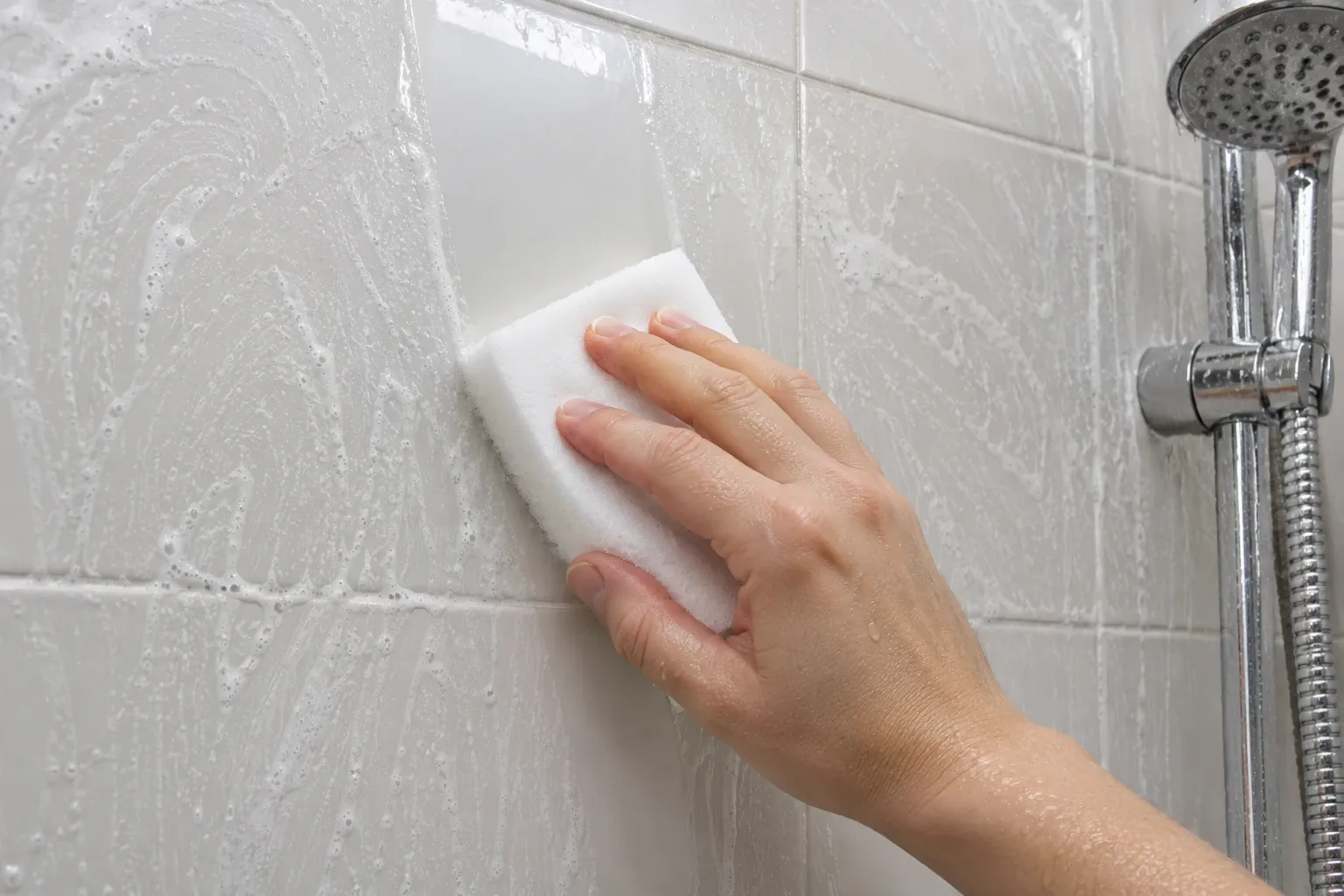
University of Nebraska–Lincoln Extension explains that soap used in hard water combines with dissolved calcium and magnesium to form a sticky soap curd, which can deposit on bathtubs and showers. North Dakota State University Extension calls those curds soap scum, and treats mineral scale as a separate problem: when hard water is heated, calcium and magnesium carbonates form a crusty scale. On a shower wall the two often sit together. Soap scum is a filmy, cloudy layer; hard-water scale is more of a crust or a spotty deposit. A cleaner labeled for both is a good first pass.
How to clean soap scum off shower tile, step by step
Work in a small section, from the top of the wall down, so dirty runoff doesn't streak a cleaned area.
- Check the tile and pretest. Ceramic and porcelain can take a soap scum remover labeled for tile. Marble, travertine and limestone need a cleaner approved for stone. Daltile's ceramic and porcelain care guide says to use a cleaner safe for the tile and the grout, and to test a small area first.
- Ventilate and clear loose debris. Open a window or run the bath fan, and wear gloves if the label calls for them. LATICRETE's STONETECH datasheet says to sweep or vacuum loose debris first and to keep children and pets out of the area.
- Spray a soap scum remover labeled for tile. Spray a ready-to-use foam such as STONETECH Soap Scum Remover directly on the soiled area. LATICRETE says not to spray unintended surfaces or mix the product with other chemicals. Follow the dwell time, and don't let it dry on the tile.
- Wipe with a non-scratch sponge. Marazzi's ceramic tile care instructions call for a cloth, sponge or non-metallic brush, not steel wool or scouring pads. Use a zero-scratch sponge made for showers and light pressure.
- Treat leftover hard-water scale as a separate pass. A crusty deposit that remains is likely mineral scale, not more soap curd. Repeat with a cleaner labeled for hard-water stains on that surface.
- Rinse thoroughly with clean water. The Tile Council of North America (TCNA) notes that an unrinsed cleaner can leave a sticky soap film that attracts dirt. Daltile says to rinse with clean water and does not recommend no-rinse cleaners. LATICRETE calls for a thorough rinse, then a repeat on heavily soiled areas.
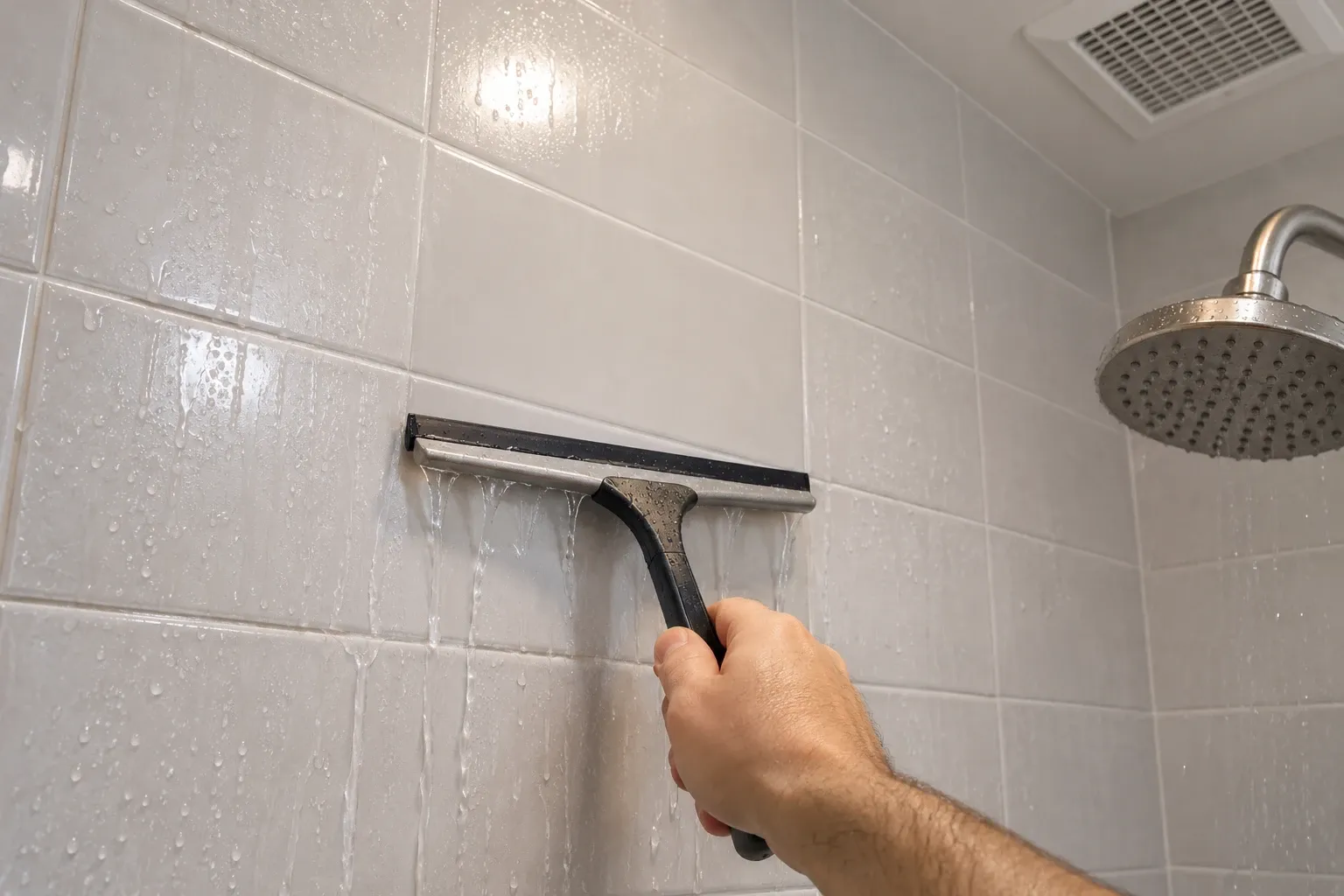
- Squeegee the walls dry and run the fan. Daltile says to squeegee or wipe the surface dry after rinsing. A shower squeegee made for tiled walls pulls the water off so minerals don't dry in place.
What you'll need
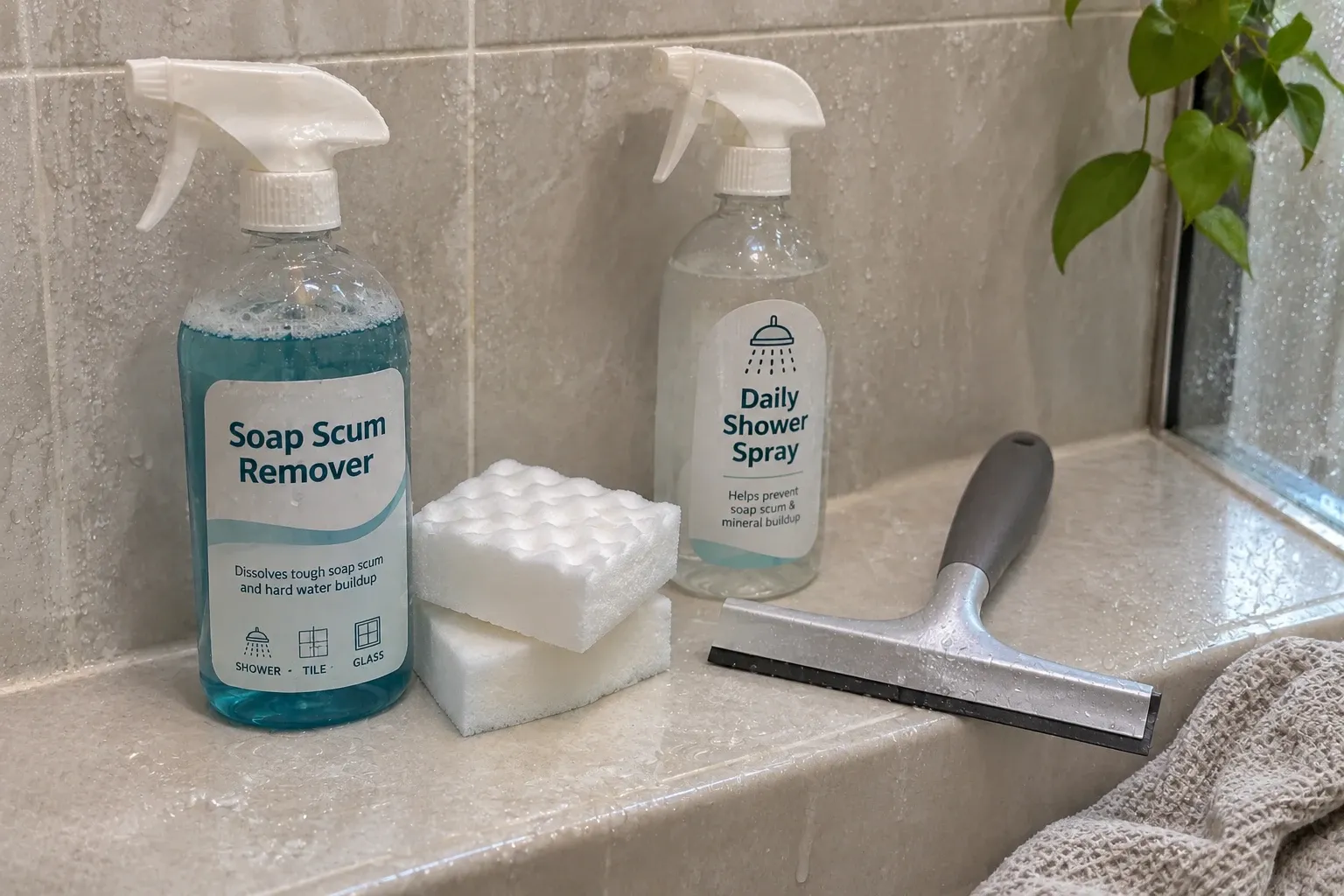
- Soap scum remover safe for tile: STONETECH Soap Scum Remover, 24 oz spray. LATICRETE's datasheet says it removes soap scum, hard water stains and dirt from natural stone, tile and grout, and that it cleans soap scum on natural stone without scratching. Follow the label, including the rinse and the eye and skin cautions.
- Non-scratch scrub sponge for shower walls: Scotch-Brite Zero Scratch Scrub Sponges, 6 pack. The listing says these non-scratch sponges are safe on tubs, showers and glass, and not to use them on stainless-steel appliances.
- Daily shower spray: Granite Gold Shower Cleaner, 24 oz. The listing says it is for granite, marble, limestone, travertine, ceramic and glass tiles, and that regular use will prevent soap scum and hard-water deposits. The maker's directions are to spray and wipe dry with a lint-free cloth.
- Shower squeegee: OXO Good Grips Stainless Steel Squeegee. The listing says it is for shower doors, tiled walls and mirrors.
- Nitrile gloves if the label calls for them, a lint-free cloth, and the bath fan.
Add all 4 items to your Amazon cart
The cart link adds the 24 oz STONETECH soap scum remover, the 6-pack of zero-scratch sponges, the 24 oz Granite Gold daily shower spray and the OXO shower squeegee. Review variants, seller and quantities before checkout; Amazon may ask you to sign in.
A vinegar-free option for natural stone shower walls
If the shower is marble, travertine or limestone, skip vinegar, lemon juice and acidic bathroom cleaners. The Natural Stone Institute says those acids may dull or etch calcareous stones, and Daltile says even a light vinegar-and-water solution will etch many kinds of natural stone. Daltile's stone FAQ says to remove soap scum with an approved non-acidic soap scum remover, and to squeegee after each shower. The STONETECH and Granite Gold products above are labeled for those stones as well as ceramic and porcelain. Pretest, follow the label, and leave a large or already-etched stone shower to a professional. Everyday care of natural stone floors is a different job and is not covered here.
How to prevent soap scum buildup
The Natural Stone Institute and Daltile both say soap scum in wet areas can be minimized by using a squeegee after each shower. Hang a shower squeegee in the stall, pull it down the walls and glass before you step out, and run the bath fan until the room is dry. A daily shower spray labeled for your tile helps between deep cleans: Granite Gold's listing says regular use will prevent soap scum and hard-water deposits, and the maker's directions are to spray and wipe dry. Skip daily sprays that list lactic acid, vinegar or other acids if the walls are natural stone, or if you want to protect cement grout.
Mistakes that leave film or damage tile
- Cleaning with vinegar or other acids. TCNA explains that cement grout is dissolved by acids, and that vinegar reacts with grout the way vinegar reacts with baking soda. Marazzi warns that acids can damage grout and the glazed surface of the tile.
- Skipping the rinse. Leftover cleaner dries into a sticky film. TCNA says truly clean ceramic tile, without that film, stays cleaner.
- Scrubbing with abrasive pads or scouring powders. The Natural Stone Institute notes that scouring powders and creams often contain abrasives that can scratch stone.
- Using oil- or wax-based cleaners. TCNA says these leave a waxy or oily film in grout that attracts dirt.
- Leaving the shower wet. Water that dries on the wall leaves minerals behind and gives soap curd a place to stick.
When to call a pro
Call a professional if the film covers a large shower and will not lift after a careful clean and rinse, if the tile is natural stone that looks dull or etched, if grout is cracked, crumbling or stained in a way a home pass will not fix, or if mildew keeps coming back. Our tile and grout cleaning service covers shower walls as well as floors, with stone-safe products on natural stone.
Sandy Carpet Cleaners is one call away
We clean soap film and soil from shower walls and other tile for homes in Sandy, OR and nearby towns from Gresham to Estacada. Call (971) 446-7578 for a free written quote. Phone hours are Mon–Fri, 8 AM–6 PM, and you can also email info@sandycarpetcleaners.com.
Soap scum on shower tile FAQ
Is soap scum the same as hard water stains on shower tile?
No. UNL Extension treats soap curd, from soap plus hard-water minerals, and mineral scale as two different deposits. They often sit together, and lifting the film may leave crusty scale behind.
Can I use vinegar to clean soap scum off shower tile?
We don't recommend it as the regular method. TCNA says vinegar dissolves cement grout, and the Natural Stone Institute and Daltile warn that it can etch marble, travertine and limestone. Use a non-acidic soap scum remover labeled for your surface, and rinse well.
How do I remove soap scum without scratching shower tile?
Use a non-scratch sponge made for showers, or a nylon brush, with light pressure. Marazzi recommends a cloth, sponge or non-metallic brush. Skip scouring powders and steel wool.
How do I prevent soap scum buildup in the shower?
Squeegee the walls and glass after every shower, which Daltile and the Natural Stone Institute both recommend, and run the fan. A daily shower spray labeled for your tile, wiped dry as directed, helps between deep cleans.
What's a vinegar-free way to clean soap scum on natural stone tile?
Use a non-acidic soap scum remover approved for stone, which is what Daltile's stone FAQ calls for. Pretest, follow the label, and skip vinegar, lemon and acidic tub-and-tile cleaners.
More articles
- How to Clean Mattress Stains and Odors at HomeBlot mattress stains with little water, dry the bed fully, and see when a stain or odor means you should call a pro.
- Best Everyday Vacuums for Homes with PetsA CRI Seal of Approval shortlist for pet hair on carpet, plus how often to vacuum and when a vacuum is not enough.
- How to Get Pet Vomit Smell Out of CarpetScrape and blot pet vomit, then treat the odor with a pet enzyme cleaner. Why vomit differs from urine, and when the smell means you should call a pro.
Free quote
Let's get your floors fresh
Tell us what needs cleaning in Sandy, Oregon, or nearby. We'll get back to you during phone hours, Mon–Fri 8 AM–6 PM, and we can book after-hours and weekend appointments. Questions first? Read the FAQ.