
Mattress Cleaning in Sandy, OR: Very Low Moisture That Does Not Soak the Foam
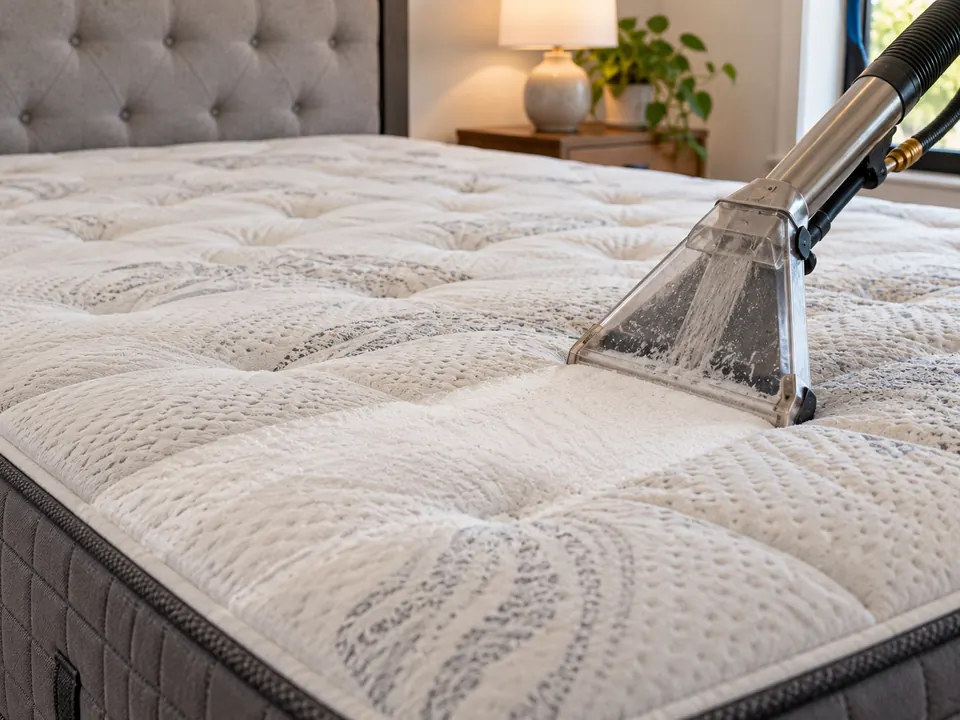
A mattress cannot be rinsed, so the amount of water that goes into it matters more than for any other surface in the house. Our very low moisture method puts very little water into the mattress, and it is typically ready for sheets in about an hour. The American Lung Association names mattresses as a place dust mites live and recommends keeping indoor humidity below 50 percent.
- Typical dry time
- About 1 hour; the mattress stays bare until it is dry
- Method
- Very low moisture cleaning with airflow
- Where dust mites live (ALA)
- Bedding, mattresses, upholstered furniture, carpets, curtains
- Humidity guidance
- Below 50% (American Lung Association; National Jewish Health)
- What we do not do
- Treat bed bugs or promise allergen removal
- Quote
- Free and written; tell us the size and the problem
What a mattress collects
A mattress spends a third of every day in contact with a body. Skin scales, sweat, body oils, spilled drinks, and the occasional accident from a child or a pet work their way into the upper layers, where they hold odor and discolor the fabric. Skin scales matter for a second reason. National Jewish Health says dust mites feed on human skin scales, and the American Lung Association says mites can live in bedding, mattresses, upholstered furniture, carpets, and curtains.
None of this means a mattress is dirty in a way that calls for alarm. It means that a surface that holds soil for years benefits from cleaning, in the same way a sofa or a carpet does. A visible stain, a sour smell, or a mattress that has been in a guest room for a decade are the usual reasons people call.
How much water a mattress can take
Foam and fiber layers absorb liquid and release it slowly. Serta's mattress care guidance warns that saturating the foams and fibers with liquid cleaners and water can damage the foam, and it advises spot cleaning with warm water and a mild detergent and letting the surface dry completely before putting sheets back on. The advice behind it is ordinary: a mattress that stays wet inside stays damp for a long time, and damp bedding works against the humidity targets that the health sources set.
The American Lung Association says to keep indoor humidity below 50 percent. National Jewish Health says mites do not survive when humidity is below 50 percent and also advises keeping home humidity below 40 percent. A wet mattress is a local source of the opposite condition. That is why very low moisture cleaning suits this job. Our machines put very little water into the mattress, we add airflow to move what remains, and the mattress is typically ready for sheets in about an hour. Thick pillow-top and memory-foam mattresses take longer, and we tell you what to expect. For a full explanation of how airflow speeds drying, see how drying works.
Dust mites and allergens: what cleaning can and cannot do
Cleaning a mattress surface removes soil and odor and may lower the amount of loose material on the surface. It is not an allergy treatment, and we do not claim it kills dust mites. The two health sources we read agree on what they recommend instead. The American Lung Association says to cover mattresses and pillows with allergen encasements, wash bedding in hot water of at least 120 degrees Fahrenheit once a week, keep humidity below 50 percent, and use a HEPA-filter vacuum weekly on carpet. National Jewish Health recommends dust-proof zippered encasings on mattresses, pillows, and box springs, weekly washing of all bedding in 130-degree water, and removing carpet from the bedroom.
If you or someone in your home has asthma or a dust mite allergy, those measures come first, and a clinician can advise on the rest. A cleaning can still be useful as part of that routine, especially to remove stains and odor before a new encasement goes on. Our non-toxic, eco-friendly solutions are safe for children and pets when used as directed, and the mattress should be fully dry before it is covered.
Stains, accidents, and odors
Urine, sweat, milk, and spilled drinks behave differently in a mattress than on a floor, because the liquid sinks through the fabric into the layers below. Blot a fresh spill with a clean white cloth and do not rub, since rubbing pushes the liquid deeper, which is the same rule CRI gives for carpet. Avoid soaking the area with a household cleaner. If the spill came from a child or a pet, tell us when you request a quote, because the treatment is closer to our pet stain and odor work than to ordinary soil removal.
Older stains vary. Many lift at least partly, and some leave a faint mark in the fabric. We tell you what to expect before we start. Many mattress warranties address stains and liquid damage, so read yours before any cleaning, ours or anyone else's.
What we clean, and what we do not
We clean the mattress surface and treat stains and odor on it. Tell us when you request a quote whether you also want a box spring, a topper, or a futon cleaned, and the size of each. We do not treat bed bugs, which are a pest-control problem, and we will tell you so if you describe signs of them.
After the cleaning
Leave the mattress bare until it is dry. We tell you when that is, and in typical conditions it is about an hour. Then put on a protector or an allergen encasement if you use one, and wash the sheets before they go back on. Both health sources recommend regular hot-water washing of bedding, and the humidity advice applies to the whole bedroom. A window cracked on a dry day and a bedroom that is not overheated help keep humidity down.
What a visit looks like
Quote and warranty check
We confirm the size, the type of mattress, and the problem. We suggest reading your mattress warranty before cleaning.
Strip and inspect
The bed is stripped, and we look over the surface for stains, odors, and areas that need pre-treatment.
Pre-treat stains
Stains and odor spots get targeted treatment first, with non-toxic, eco-friendly solutions.
Very low moisture cleaning
Our machines clean the mattress with very little water, so the foam is not saturated.
Airflow and drying
We add airflow and tell you when the mattress is dry and ready for a protector and sheets.
What sets Sandy Carpet Cleaners apart
- Built around not soaking the mattressVery low moisture cleaning puts very little water into the foam, which is the risk Serta warns about.
- Ready for sheets in about an hourA typical mattress is dry in about an hour, so the bed can be made the same day.
- Straight answers on allergensWe do not claim to kill dust mites. We tell you what the Lung Association and National Jewish Health recommend and what our cleaning does.
- Non-toxic and safe for the familyOur solutions are non-toxic and eco-friendly, safe for children and pets when used as directed.
- A fresh smellWe aim for a clean, great-smelling mattress without a heavy chemical odor.
What affects the quote
The mattress size and the number of mattresses are the first drivers. The second is the condition: a light refresh costs less work than a set-in stain or an accident that soaked through. Thick pillow-tops and memory foam need more care. If you want a box spring or a topper cleaned, that adds to the job. We do not publish dollar amounts because the figures depend on those details, and we give you a free written quote.
Questions to ask any mattress cleaner
- How much water goes into the mattress, and how long until it is dry?
- Will cleaning affect my mattress warranty?
- Do you claim to kill dust mites or remove allergens, and what is that based on?
- Do you treat bed bugs? (A pest-control company does.)
- Is the quote in writing, with the size and type of each mattress listed?
Questions about mattress cleaning
How long until I can use the bed?
In typical conditions a mattress is ready for sheets in about an hour after cleaning. Thick foam and humid rooms take longer. Leave it bare until we say it is dry.
Does mattress cleaning kill dust mites?
We do not claim it does. The American Lung Association recommends allergen encasements, weekly hot-water washing of bedding, humidity below 50 percent, and a HEPA vacuum for carpet. Cleaning removes soil and odor and can be part of that routine.
Can you remove urine from a mattress?
We treat urine stains and odors, and results depend on how long the stain has been there and how deep it went. We tell you what to expect before we start.
Is a mattress safe to sleep on after cleaning?
Our solutions are non-toxic and eco-friendly and safe for children and pets when used as directed. Let the mattress dry completely before you cover it and sleep on it.
Will cleaning void my mattress warranty?
Warranties vary, and many address stains and liquid damage. Read yours and ask the manufacturer if you are unsure.
Do you treat bed bugs?
No. Bed bugs need a pest-control company. We clean mattress soil, stains, and odor.
Related services
Mattress Cleaning near you
Sources
- American Lung Association, Dust Mites
- National Jewish Health, Dust Mite
- Serta, How to Care for Your New Mattress
- Carpet and Rug Institute, Carpet & Rug Care Guide (spot removal: blot, do not scrub)
Industry guidance changes. Check your own flooring or furniture maker's instructions and warranty, which take priority over general advice.
Free quote
Let's get your floors fresh
Tell us what needs cleaning in Sandy or nearby. We'll get back to you during business hours. Questions first? Read the FAQ.