
Carpet Stain Removal in Sandy, OR: Wine, Coffee, Mud, Pet Marks, and Set-In Spots
Most carpet stains come out when they are treated early, and many older ones lift at least partly. The Carpet and Rug Institute's advice for a fresh spill is to blot with a dry white cloth and not scrub, because scrubbing distorts the pile and spreads the spill. We pre-treat the stain, clean the area, and tell you before we start how much improvement to expect.
- First response (CRI)
- Blot liquids with a dry white cloth; do not scrub
- Act quickly (CRI)
- Most carpet is stain-resistant; "no carpet is completely stain proof"
- Why spots return (CRI)
- Residue from spot cleaners or sticky spills left in the carpet
- Warranty caution (CRI)
- Solutions above pH 10 or with optical brighteners can distort color
- Our approach
- Pre-treat, then VLM cleaning; steam when soil is heavy
- Quote
- Free and written; photos of each stain help
What to do in the first few minutes
The Carpet and Rug Institute (CRI) gives the first-response steps in its care guide, and they are the ones to follow before anyone calls a cleaner. Blot liquids with a dry, white, absorbent cloth or a white paper towel and continue with a dry cloth until the area is dry. Do not scrub, because scrubbing can distort the pile. Scrape semi-solids up gently with a rounded spoon, and break up solids and vacuum them until they are gone. For dry spills, scrape and vacuum first, since pouring liquid onto a dry spill creates additional problems.
If a cleaner is needed, test it first. CRI says to apply a few drops in an inconspicuous area, hold a white cloth on the wet spot for ten seconds, and check the cloth and the carpet for color transfer or damage. Work from the edge of the spill toward the center so that it does not spread. CRI's consumer tips add that plain water often works better than untested carpet cleaners. When the spill is gone, rinse the area with cold water and blot until the solution is removed, since solution left behind causes the next problem on this page.
Why a stain comes back
A spot that looks clean and returns within days is usually a residue problem. CRI says that areas of soiling that appear after spot cleaning are most often caused by inadequate removal of the spot-removal solution or by spills that leave a sticky residue. Residue attracts soil, so the spot darkens again. Interface's carpet guide gives a test for cleaning solutions based on the same idea: let a sample dry on a glass dish, and if the residue is dry powder, flakes, or crystals it is acceptable, while an oily, greasy, sticky, or waxy residue is likely to cause rapid resoiling.
Some home products make it worse. CRI warns that certain spot removers have a pH higher than 10 or contain optical brighteners, which can distort carpet color and void the manufacturer's warranty. It says never to use laundry detergent of any kind, which can contain optical brighteners that dye the fiber, or automatic dishwasher detergent, which can contain bleach that destroys carpet color. Ask any cleaner how residue is removed and what the solution is.
Common stains and how they behave
Interface sorts spots into three groups for the purpose of choosing a solution: water-based, oil-based, and solids, including gum. Coffee, tea, juice, and wine are water-based, and they respond best to being blotted before they dry. Grease, makeup, and cooking oil are oil-based and spread when rubbed. Gum, wax, and mud are solids, and removing the bulk before any liquid touches them matters most. Pet stains are a category of their own because of the odor, and they are covered on our pet stain and odor page.
Some stains are dyes. Mustard, hair color, and some drinks carry pigment that bonds to fiber, and a cleaner may lift part of it and leave the rest. CRI notes that unusual spots and stains may require specialized removal to avoid permanent damage to fibers or dyes, and that a professional may restore the appearance with special treatments, re-dye the area, or replace the damaged section. Re-dyeing and replacement are carpet repair, and we will tell you if a stain is in that category.
Set-in stains, yellowing, and time
Time works against a stain. CRI notes that oily soil may be very difficult to remove after it has been on carpet a long time, and that spills or soils left in place may become permanent. Fresh stains are the easiest, many older ones lift partly, and a few leave a ghost of the original mark.
Yellowing is a separate problem with several causes. CRI lists pollutants from heating fuels, changes in alkalinity, cleaning solutions, and atmospheric or environmental contaminants, and it says not all yellowing can be removed. Acid rinses made with white vinegar, citric acid, or tartaric acid often help, and an alkaline detergent used before them may cause permanent yellowing. That is one more reason to leave a stubborn mark alone until it can be looked at.
Heat, steam, and choosing the method
The method matters as much as the product. For fresh, light stains in otherwise clean carpet, our very low moisture cleaning is a good fit. It treats the stain, cleans the area, and dries in about an hour. For heavy soil, an old stain in a dirty traffic lane, or a stain with an odor, steam cleaning may be the better method, and we offer it. Heat can also make some stains permanent. Humane World for Animals warns that heat from a steam cleaner sets urine stains and odor into man-made fibers, and the same caution applies to any stain whose chemistry is unknown. We look at the stain first and choose the method second.
There is also a practical reason to keep water low around a stain. Soil that has settled into the pad and backing can travel back up the pile as the carpet dries, and a method that puts less water into the carpet tends to give it less to carry. We say so as a tendency and not as a guarantee, and we tell you when a spot may need a second look after it has dried.
Stain-resistant carpet, protectors, and warranties
CRI notes that most carpet made today has built-in stain and soil resistance, introduced in the industry in 1986, and that this makes carpet easier to maintain without making it stain proof. It says to attempt removal as soon as something is spilled or tracked on the carpet and that spills left to sit may become permanent. It also says that improper action during cleaning, or an unauthorized treatment, could void a warranty, and that topical treatments such as stain repellents, soil retardants, and deodorizers may void warranties when applied without the manufacturer's approval. Read the warranty before anyone applies a protector, ours or anyone else's.
What a visit looks like
Identify the stain
We ask what it is, how old it is, and what has been tried. A photo in daylight helps.
Test the carpet and the solution
We test in a hidden area for colorfastness and reaction before treating the visible stain.
Pre-treat
The stain gets targeted pre-treatment with non-toxic, eco-friendly solutions.
Clean the area
VLM cleaning handles light stains and standard maintenance. Heavy soil or odor may call for steam.
Dry and re-check
We add airflow, and we check the spot with you once the carpet is dry. We tell you if a spot needs a second treatment.
What sets Sandy Carpet Cleaners apart
- Method follows the stainWe offer VLM and steam, and we choose after we see the stain, not before.
- Dry in about an hour for VLM jobsA typical VLM cleaning leaves the room dry in about an hour, so there is no wet carpet to protect for a day.
- Clear about set-in marksWe tell you in the quote which stains should lift, which may lift partly, and which are dye or damage that cleaning will not fix.
- Non-toxic, eco-friendly solutionsSafe for children and pets when used as directed, with a clean smell and no heavy chemical odor.
- A written scopeThe quote lists each stain area and the method we recommend.
What affects the quote
Stain work is priced by the number of stains, their size and age, the carpet's fiber, and whether the whole room needs cleaning around them. A single fresh spill is a small job, and a dozen set-in stains across a hallway is a larger one. We do not publish dollar amounts because they depend on those details, and we give you a free written quote. Send photos of each stain in daylight, say what it is if you know, and tell us what you have already tried.
Questions to ask any stain-removal cleaner
- Will you identify the stain and test the carpet and solution before treating it?
- What solution do you use, and how is it removed so it does not leave a sticky residue?
- Which method do you recommend for this stain: low moisture or steam, and why?
- What improvement should I expect, and what happens if the stain comes back?
- Will the treatment affect my carpet's warranty?
Questions about carpet stain removal
Can you remove red wine from carpet?
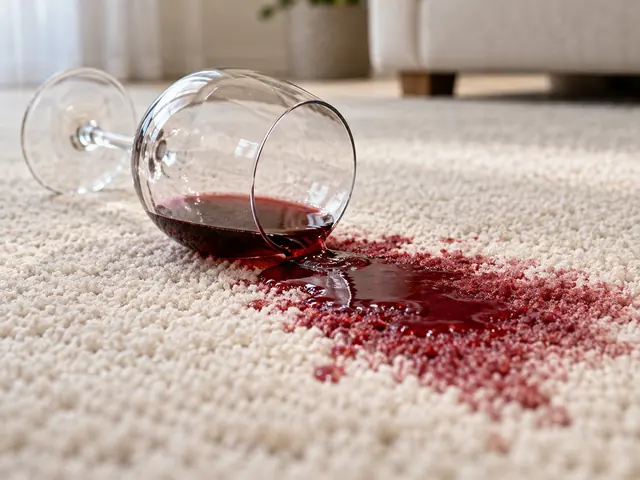
Often, especially when it is treated soon. Wine carries dye, so an older stain may lift partly and leave a mark. We tell you what to expect before we start. Blot a fresh spill with a dry white cloth and do not scrub.
Why did the stain come back after I cleaned it?
CRI says soiling that reappears after spot cleaning is most often caused by solution left in the carpet or a spill that left a sticky residue. A proper cleaning removes that residue and the soil it attracted.
Can I use vinegar, ammonia, or laundry detergent on a stain?
CRI lists white vinegar and ammonia solutions among spot-removal options with cautions: test a hidden area first, rinse completely, and never use laundry or dishwasher detergent. Humane World for Animals advises against ammonia or vinegar on pet urine. Water alone often works better than an untested cleaner.
Will steam cleaning set a stain?
Heat can set some stains, and Humane World for Animals warns that it sets urine into man-made fibers. We choose the method after we see the stain, and we tell you if heat is a risk.
Can you remove very old stains?
Many older stains improve, and some leave a faint mark. CRI notes that spills left in place may become permanent. We tell you what to expect before starting.
How long until the carpet is dry?
A typical VLM cleaning is dry in about an hour, sometimes in as little as 20 minutes. A steam cleaning takes longer, and we tell you before we start.
Related services
Carpet Stain Removal near you
Sources
- Carpet and Rug Institute, Carpet & Rug Care Guide (revised 04/2019), spot removal and stain-resistant carpet
- Carpet and Rug Institute, Easy Carpet Cleaning Tips for Your Home
- Interface, Carpet Tile Maintenance Guide (spot cleaning, residue test)
- Humane World for Animals, How to Remove Pet Stains and Odors
Industry guidance changes. Check your own flooring or furniture maker's instructions and warranty, which take priority over general advice.
Free quote
Let's get your floors fresh
Tell us what needs cleaning in Sandy or nearby. We'll get back to you during business hours. Questions first? Read the FAQ.